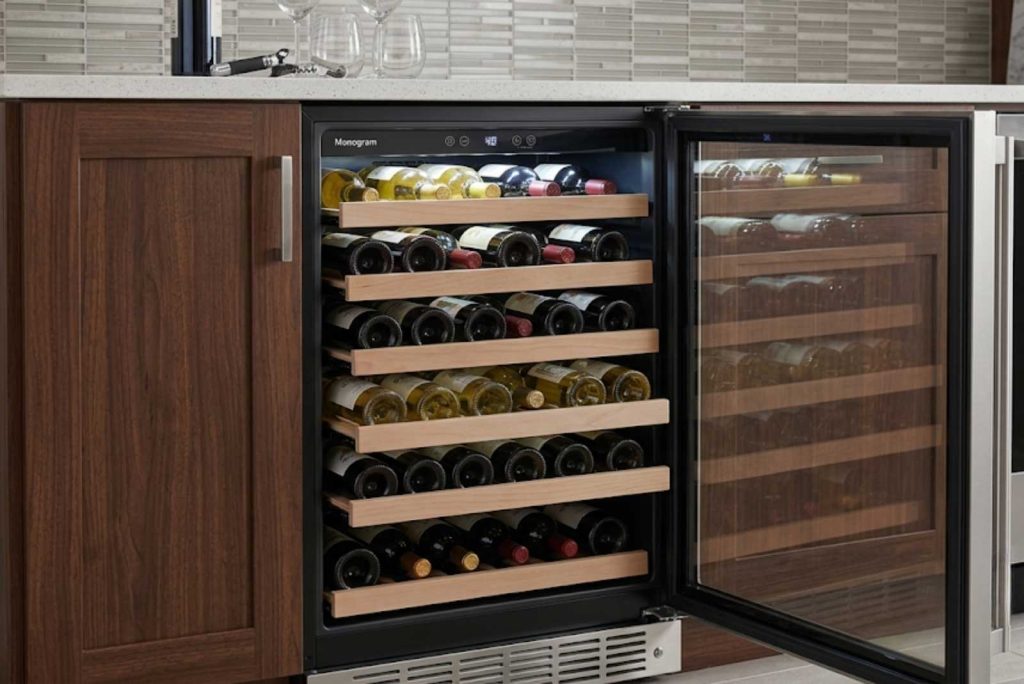
A GE Monogram wine cooler that won’t cool usually has one of three faults: a failed compressor, where the fan runs but no cold air comes; a miscalibrated thermostat; or a worn door seal letting warm air in. Start by checking the temperature setting, the door gasket, and the condenser coils before calling for service.
Wine lives in a narrow temperature band, so a cooler that drifts warm puts a collection at risk fast. This guide walks the three most common causes in order, shows how to tell them apart, and flags the ones that need a technician. GE Monogram Repair Expert services built-in and undercounter GE Monogram wine coolers across California, Washington, and Massachusetts. If the unit won’t hold temperature after the checks below, you can book a certified technician for a diagnosis.
First, check the easy things
Before suspecting a part, rule out the simple causes that mimic a failure. Confirm the unit has power, the breaker hasn’t tripped, and the temperature is set in the correct range; a wine cooler should hold 51–55°F for most storage.
Place a separate thermometer inside for 12 to 24 hours and compare it to the display, since a sensor reading near the door or fan can mislead. Make sure the cooler is level, the vents are clear, and bottles aren’t blocking the interior fan. A simple power reset, unplugging for 30 to 60 minutes, can clear an electronic glitch.
Compressor: the fan runs but it won’t cool
The classic “fan runs but no cold air” symptom usually points to the compressor. On a compressor-based cooler, the condenser fan can keep spinning while the compressor itself fails to circulate refrigerant, so the cabinet slowly warms even though the unit sounds like it’s working.
Touch the compressor at the back: if it is very hot, it is struggling, often because of a failed start relay or capacitor, dirty coils, or low refrigerant. A compressor that clicks and short-cycles, or stays silent while the fan runs, needs professional testing. Sealed-system and compressor work is not a DIY job; that is a wine cooler repair call.
Thermostat: wrong readings, no signal to cool
The thermostat tells the compressor and fans when to run, so a faulty one can leave the cabinet warm even with a healthy compressor. A miscalibrated thermostat misreads the interior temperature and never triggers a cooling cycle.
Use the thermometer test: if the display says 54°F but your thermometer reads 65°F, the sensor or thermostat is likely the fault. A defective thermostat is replaced, not repaired, and on a built-in unit that replacement is best left to a technician who can confirm the diagnosis first. A bad thermostat can also overcool in rare cases, freezing the cabinet.
Door seal and condenser coils: warm air and overheating
Two maintenance faults cause warming that looks like a part failure. A worn door gasket lets warm room air leak in, forcing the cooler to run constantly and still lose the battle.
Test the seal with the paper method: close a sheet of paper in the door, and if it slides out with no resistance, the gasket needs replacing. Dirty condenser coils are the other culprit, since dust traps heat and makes the compressor overheat; clean them with a brush and vacuum every two months, the same job covered in our condenser coil cleaning guide. Both fixes are inexpensive and prevent bigger compressor problems.
Compressor or thermoelectric? Know your unit
The right diagnosis depends on which cooling system you have. Built-in and undercounter Monogram wine coolers are typically compressor-based, the same technology as a refrigerator, and handle warm rooms well.
Thermoelectric coolers use a fan and the Peltier effect instead of a compressor, and they struggle to hold temperature once the room climbs above about 77°F. If you have a thermoelectric unit in a hot space, moving it somewhere cooler or improving ventilation can restore performance on its own. A compressor unit that won’t cool in a normal room points to a genuine fault, not the environment.
When to call a technician
Some of these faults are owner-fixable, and some are not. Cleaning coils, replacing a gasket, clearing vents, and adjusting the setting are within reach; sealed-system, compressor, thermostat, and refrigerant work are not.
If the cabinet stays warm after clean coils, a good seal, and a correct setting, the fault is internal and needs diagnosis. GE Monogram Repair Expert works from a diagnostic-first written quote, so you see the fault and the price before any repair starts, and certified technicians fit genuine OEM parts. To weigh the fix against the unit’s value, see our repair-or-replace guide.
Frequently asked questions
Why is my GE Monogram wine cooler not cooling but the fan is running?
A running fan with a warm cabinet usually means the compressor isn’t circulating refrigerant, often from a failed start relay, capacitor, or low refrigerant. The condenser fan can keep spinning while the compressor fails. Touch the compressor: if it’s very hot or silent while the fan runs, book a technician for testing.
How do I know if my wine cooler compressor is bad?
Signs of a failing compressor include a cabinet that won’t cool, a compressor that’s very hot to the touch, and clicking or short-cycling where it starts and stops quickly. A silent compressor while the fan runs is another sign. Compressor testing and repair need a technician, since the sealed system is involved.
What temperature should a GE Monogram wine cooler be set to?
Set a wine cooler to 51–55°F for general storage, with reds toward the warmer end and whites cooler. Use a separate thermometer for 12 to 24 hours to confirm the real interior temperature, since the display can read off if the sensor sits near the door or fan. Dual-zone units let you split the ranges.
Can a wine cooler thermostat be repaired?
No, a defective thermostat is replaced rather than repaired. First confirm it’s the fault with a thermometer test comparing the real temperature to the display. On a built-in unit, have a technician verify the diagnosis and fit a genuine part, since a wiring or control-board issue can mimic a bad thermostat.
Is it worth repairing a GE Monogram wine cooler?
For a built-in or undercounter Monogram unit, usually yes, since the repair is a fraction of replacing an integrated appliance. A portable countertop cooler is more often replaced. Get a written diagnosis first, then weigh it with our repair-or-replace guide to decide.
Protect the collection, fix the right part
Most wine coolers that stop cooling come down to one of three things: the compressor, the thermostat, or the door seal. Rule out the setting, the seal, and the coils first, and you’ll either solve it cheaply or know exactly what to tell the technician.
If the cabinet won’t hold temperature after the easy checks, book a diagnostic visit with a certified GE Monogram technician and get a written quote before any work begins, before warm storage puts your bottles at risk.