Book your repair
Same-day appointments available. Certified Monogram technicians, OEM parts, 90-day warranty.
Why choose us
- Monogram specialists
- Genuine OEM parts
- Upfront pricing
- 90-day warranty
A GE Monogram range is a pro-style cooking instrument — a 30-, 36-, or 48-inch gas, dual-fuel, or induction range built to compete with Wolf and Viking in a serious kitchen. The burners, the oven, and the controls are engineered to tighter tolerances than a mass-market stove, and when one stops performing, the fix calls for someone who actually knows the line. We repair the GE Monogram and GE Profile range families specifically: sealed brass burners and gas safety circuits, dual-fuel electric convection ovens, and induction generator boards, each diagnosed the way it was built.
That focus matters because a Monogram range is the centerpiece of the kitchen and rarely something you want to limp along with one dead burner or an oven that won’t hold temperature. Below is what we actually fix, the models we cover, and how the repair goes.
Common GE Monogram range problems we fix
GE Monogram and Profile ranges tend to fail along a handful of predictable lines. Here are the faults we see most and what the repair usually involves.
Surface burner clicks but won't light
A burner that sparks endlessly without lighting is usually a wet or misaligned burner cap, a dirty igniter electrode, or a failing spark module. On Monogram sealed-burner cooktops the spark module fires all igniters at once, so a single soaked burner can make the whole top click. We clean and re-seat first, then test the igniter and module before replacing parts.
Burner won't stay lit or flame is weak
A flame that drops out or burns low points to the burner valve, the orifice, or the pressure regulator rather than the igniter. On dual-fuel and all-gas ranges we confirm gas pressure and valve operation so the burner returns to a full, stable flame.
Gas oven won't heat
The most common gas-oven failure on these ranges is a weak oven igniter. As it ages it stops drawing enough current to open the gas safety valve, so it glows but the oven never reaches temperature. We measure igniter draw and valve operation rather than swapping parts blind — a glowing igniter is not proof it’s good.
Dual-fuel oven won't heat or bakes unevenly
On dual-fuel Monogram ranges the oven is electric. No heat usually means a failed bake or broil element, a tripped thermal cutout, or a control/relay board fault; uneven baking points to the temperature sensor (RTD), a worn convection fan motor, or calibration drift. We identify which before quoting.
Induction zone not heating or showing an error code
Induction ranges fail at the induction generator board, the element coil, the cooling fan, or pan detection. An error code or a zone that won’t power is typically the generator board or a thermal-protection trip from a blocked cooling fan, not the cooktop glass. We read the fault, confirm cookware compatibility, and trace the affected zone.
Oven temperature is off or food cooks unevenly
If the oven runs hot or cold, the temperature sensor or calibration is the usual cause; if one side cooks faster, the convection fan motor or a worn door gasket is letting heat distribution drift. We verify actual cavity temperature against the setpoint.
Control panel unresponsive or throwing codes
A dark or frozen display, or repeating error codes, points to the control board or the membrane/keypad. We diagnose the board rather than assume the whole panel.
Oven door won't close square or self-clean won't run
Heavy pro-range doors fall out of alignment at the hinges, and a tired door gasket lets heat escape and skews oven temperature. Self-clean faults usually trace to the door lock motor or thermal cutout. We re-align, re-seal, and restore the lock cycle.
GE Monogram & Profile range models we cover
We work across the Monogram range lineup and the related GE Profile premium models, including:
- All-gas pro ranges — 30-, 36-, and 48-inch sealed-burner ranges with gas convection ovens.
- Dual-fuel ranges — gas sealed-burner cooktop over an electric convection oven, the configuration most prone to oven-calibration work.
- Induction ranges — induction cooktop over a convection oven, with generator-board and coil considerations unique to the line.
- GE Profile slide-in and front-control ranges — gas, electric, and induction slide-in models.
Because the cooking technology and controls differ across these lines, knowing which range is in your kitchen changes the diagnosis. We bring genuine GE parts matched to your model and serial rather than universal substitutes that don’t fit a pro range.
Our repair process
- Diagnosis first. — A certified technician identifies the actual fault — igniter, valve, element, sensor, generator board, or control — before quoting, so you’re not paying for guesswork.
- Genuine parts. — We use OEM GE Monogram components matched to your model and serial, which is what keeps a pro-range repair lasting.
- Correct repair. — Gas work is leak-tested and verified; electric oven and induction repairs are completed to the unit’s service standard.
- Verification. — We confirm every burner lights and holds, the oven reaches and holds its setpoint, and the controls respond before we call the job done.
Where we offer GE Monogram range repair
We serve GE Monogram and GE Profile owners across California, Washington, and Massachusetts. Visit your local page for the number that reaches your nearest office:
Not sure which office is closest, or want to book online? Reach us through our contact page.
Related GE Monogram repair services
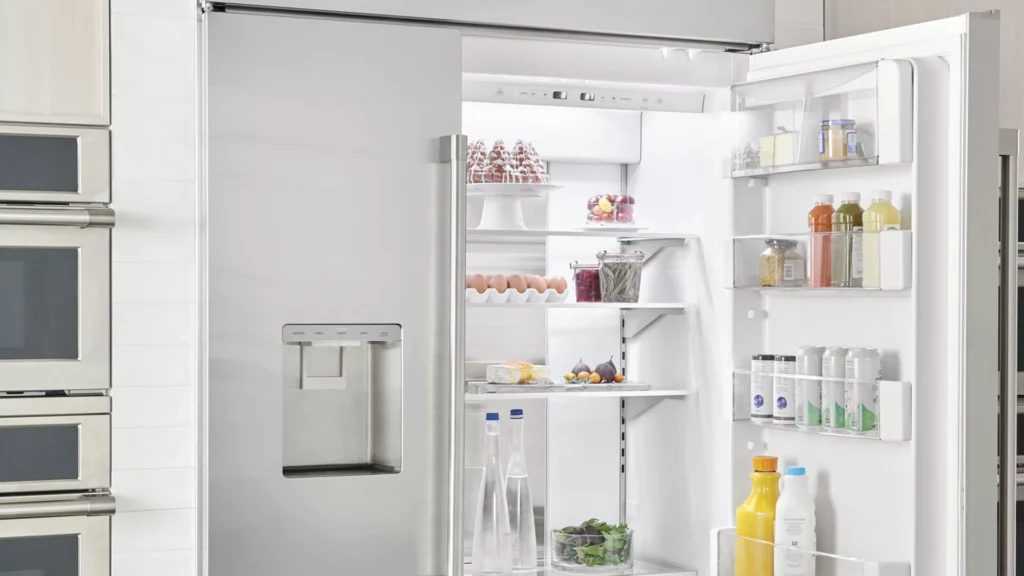
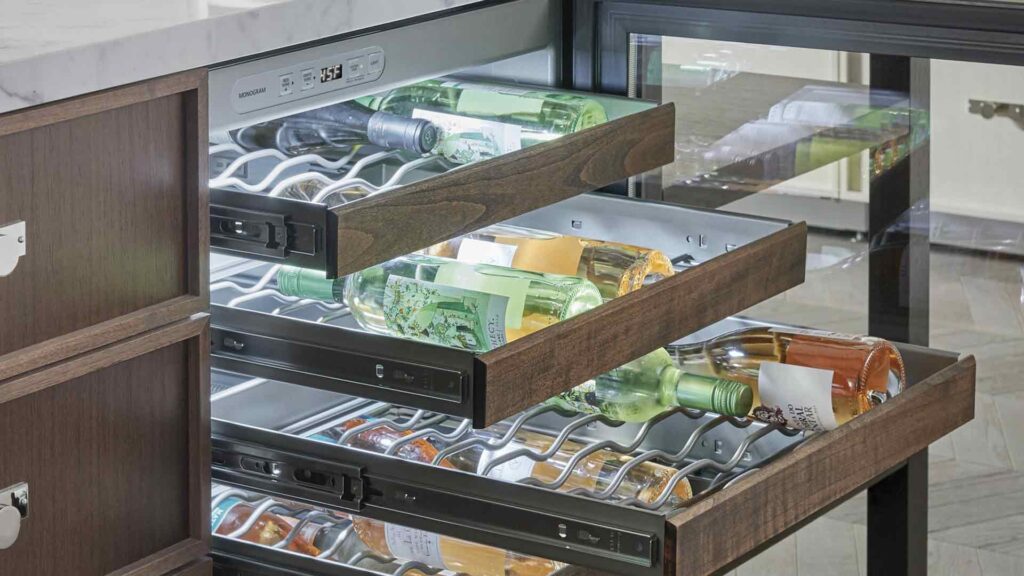
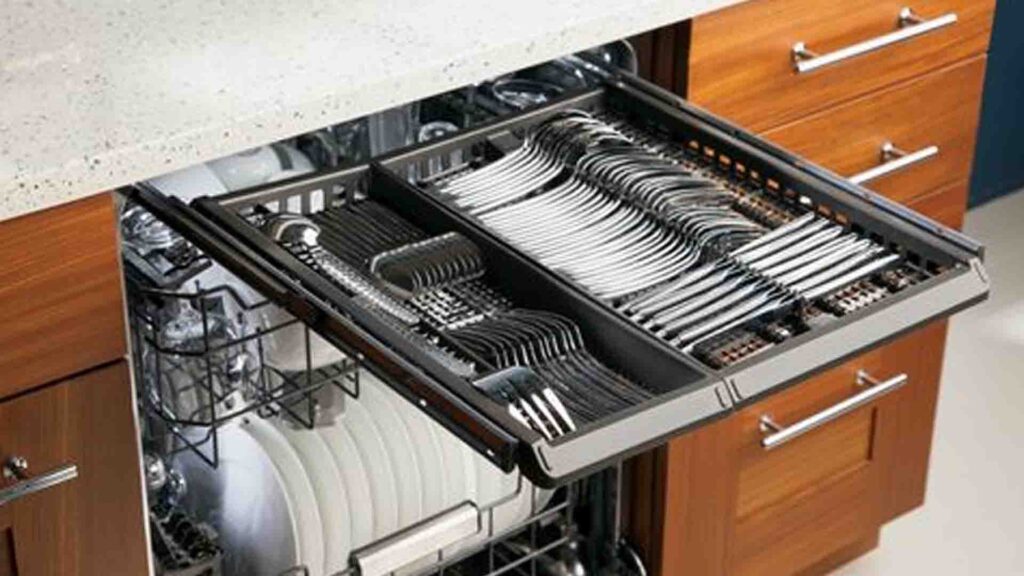
We service the full Monogram built-in kitchen, including
Frequently asked questions
How do you calibrate the oven temperature on a GE Monogram range?
Monogram ranges allow an oven-temperature offset adjustment from the control — typically within about ±35°F — entered through the settings or options menu for your model. Calibration helps when the oven is slightly off, but if it’s far out or unstable the temperature sensor is the more likely cause, which we test rather than just re-calibrating.
Why won't my GE Monogram gas oven light, and can the igniter be replaced?
The most common cause is a weak oven igniter that still glows but no longer draws enough current to open the gas safety valve, so the oven never lights. It’s a standard replacement — we measure the igniter’s current draw to confirm the diagnosis before fitting a correct-spec part.
How do you unlock the door on a GE Monogram dual-fuel range?
The oven door normally locks during and after a self-clean cycle and releases once the cavity cools. If it stays locked, the door-lock motor, the lock switch, or a thermal cutout needs service. We restore the lock cycle so the door releases and re-locks correctly.
Where is the pilot light on a GE Monogram range?
Monogram ranges use electronic ignition, not a standing pilot, so there’s no pilot to relight. Burners that click but won’t light point to the igniter, the spark module, or a wet burner cap rather than a pilot, and the oven uses a glow-bar igniter rather than a flame.
How soon can you come out?
Same-day service is available in many of our markets. Booking through your local office page or our contact form gets you the fastest scheduling for your area.
Book your GE Monogram range repair
Find your nearest office on its <a href=”/contact-us/”>location page</a> for the local number, or send us your model and the symptom and we’ll get a certified Monogram technician scheduled. Straight diagnosis, genuine parts, and a range that lights, heats, and holds temperature again.
Explore
Related Monogram services
Get your Monogram range cooking again
Same-day service from certified specialists with genuine OEM parts.