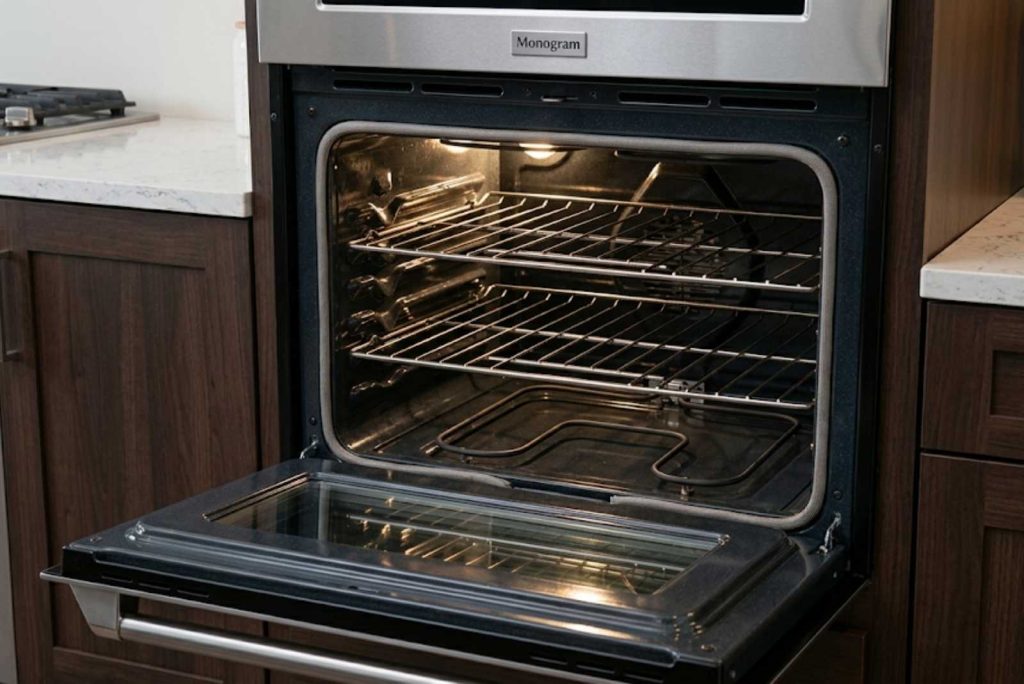
A GE Monogram oven that won’t heat usually points to one of three parts: the igniter on gas and dual-fuel models, the bake or broil element on electric wall ovens, or the control board that powers them. Rule out the simple causes first, then test the part that matches your oven type.
Your GE Monogram oven staying cold doesn’t always mean a major repair. The fix depends on whether you own a gas range, a dual-fuel range, or an electric wall oven, because each one heats differently. This guide covers the quick checks, the part most likely at fault for your model, and the point where a certified technician should take over. GE Monogram Repair Expert services built-in GE Monogram cooking appliances using OEM parts and a diagnostic-first written quote. Start with the four checks below before you order any part.
Start here: 4 checks before you replace a part
Before you blame a component, confirm the oven is set up to heat. Even gas ovens need electricity to run the igniter and control board, so a tripped breaker can leave the oven completely cold.
- Power: check the breaker and that the oven display is lit. A dual-fuel range can show power and still have no oven heat.
- Mode: make sure a delay-start, timed-bake, Sabbath, or demo mode isn’t holding the oven off.
- Control lock: a locked panel blocks the bake function on many GE Monogram models.
- Gas supply: on gas and dual-fuel ovens, light a surface burner. If the burners won’t light either, the issue is gas supply, not the oven.
If all four check out and the oven is still cold, move to the part that matches your oven type.
Gas and dual-fuel ranges: the igniter is the usual culprit
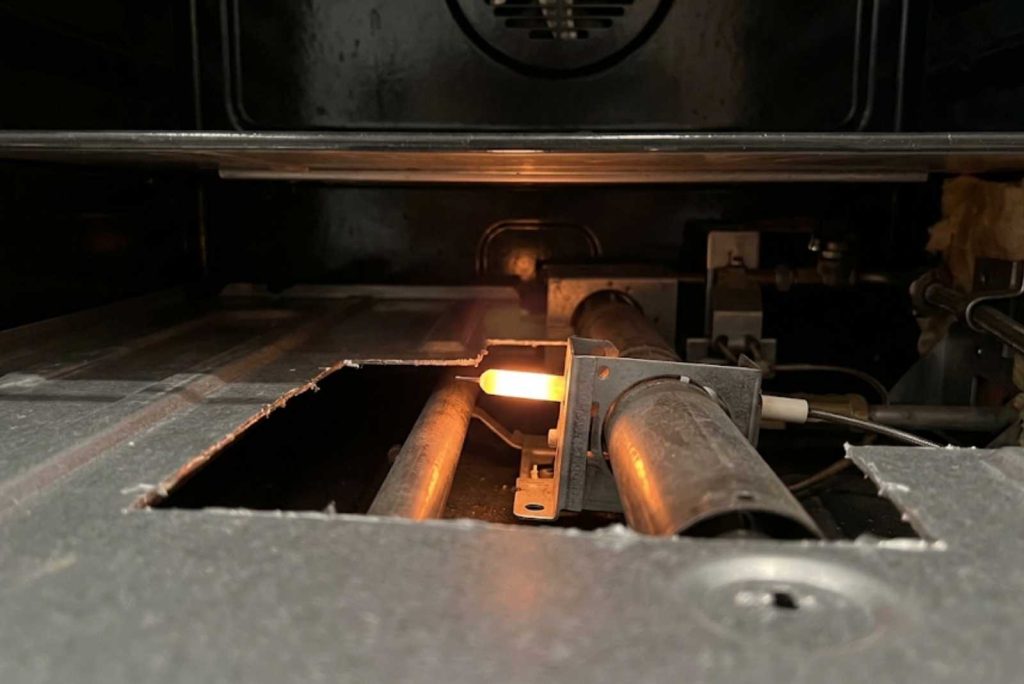
On a gas oven, the hot-surface igniter glows hot enough to open the safety valve and light the gas. Ignition faults are among the most common reasons a gas oven fails to heat, according to appliance-repair technicians (Sears Home Services).
Watch the igniter after you start a bake cycle. A healthy igniter glows bright orange and the gas lights within about 90 seconds.
If the igniter glows but the gas never lights, it has weakened and can’t draw enough current to open the safety valve — replace the igniter, not the valve. If it never glows at all and the oven has power, the fault is the igniter or the control relay that feeds it. A weak igniter is one of the most affordable cooking repairs, and the range repair team can confirm it on the first visit.
Electric wall ovens: a failed bake or broil element
Electric GE Monogram wall ovens heat with a bake element on the floor and a broil element on the ceiling. A bake element that won’t glow red within about 2 minutes of preheating has usually failed.
Look for a visible break, blister, or burn spot on the element coil — that alone confirms it. A useful clue: if broil works but bake doesn’t, the bake element is the suspect, not the board.
A multimeter continuity test settles it. No continuity means the element is open and needs replacement; good continuity sends you to the control board or sensor next.
When it’s the control board, sensor, or thermal fuse
If the igniter and element test fine, the parts that route or regulate power come next. The control board’s bake and broil relays send voltage to the heating parts, and a failed relay leaves the oven cold even when everything else works.
Two related parts can mimic a no-heat fault. A temperature sensor reading out of range tells the board the oven is already hot, and a blown thermal fuse cuts the circuit entirely.
Thermal-fuse and board failures most often appear right after a self-clean cycle, because self-clean runs extreme heat. For that reason, many technicians advise against using self-clean on a premium oven at all.
Built-in wall oven vs. dual-fuel range: why the fix differs
The repair-or-replace math changes with the appliance. A built-in GE Monogram wall oven is a high-end, professionally installed unit, so a control-board or element repair is typically a small fraction of replacement cost — an easy decision in favor of repair.
A dual-fuel range shares one cabinet between an electric oven and gas burners, which can complicate access but rarely changes the verdict on a flagship cooking appliance. For the full breakdown, see GE Monogram oven and range repair cost and the repair-or-replace cost math.
When to call a GE Monogram technician
Some faults are not DIY territory. Anything involving the gas safety valve, the control board, or internal wiring calls for a licensed technician and OEM parts matched to your model’s wattage and gas rating.
GE Monogram Repair Expert runs a diagnostic-first written quote, so you see the price before any work begins. That protects a $5,000-plus oven from a guessed-at part swap. Book a wall oven repair visit or reach the team through the contact page.
Frequently asked questions
Why is my GE Monogram oven not heating but the stovetop works?
Your oven and stovetop heat through separate systems, so a cold oven with working burners points to an oven-only part. On gas and dual-fuel models that is usually the oven igniter or safety valve; on electric wall ovens it is the bake element or control board. The cooktop burners run on their own igniters — see our burner-won’t-light guide if those act up too.
How do I know if it’s the igniter or the control board?
Watch the igniter when you start a bake cycle. If it glows but the gas never lights, the igniter is too weak and needs replacing. If it never glows at all — and the oven has power — the control board relay that feeds it has likely failed. A multimeter confirms which part lost continuity.
Can I replace a GE Monogram oven igniter myself?
Replacing a gas oven igniter is a moderate DIY job if you are comfortable shutting off the gas and power first. The part sits under the oven floor on most models. That said, a misdiagnosed igniter or a disturbed gas connection can be unsafe, so many owners book a technician to protect a premium range.
Why won’t my oven heat after a self-clean cycle?
Self-clean cycles run extreme heat that can blow the oven thermal fuse or damage the control board. If your GE Monogram oven went cold right after self-cleaning, a tripped thermal fuse is the likely cause. The fuse must be replaced, not reset, and the board should be checked for heat damage.
Get your GE Monogram oven heating again
A GE Monogram oven that won’t heat almost always comes down to the igniter, a heating element, or the control board — and the right one depends on your model. Run the four checks first, then match the symptom to the part. When the fix involves the gas safety valve, the control board, or wiring, book a certified GE Monogram technician for a diagnostic-first written quote with OEM parts. Request your wall oven repair appointment and get a clear price before any work begins.