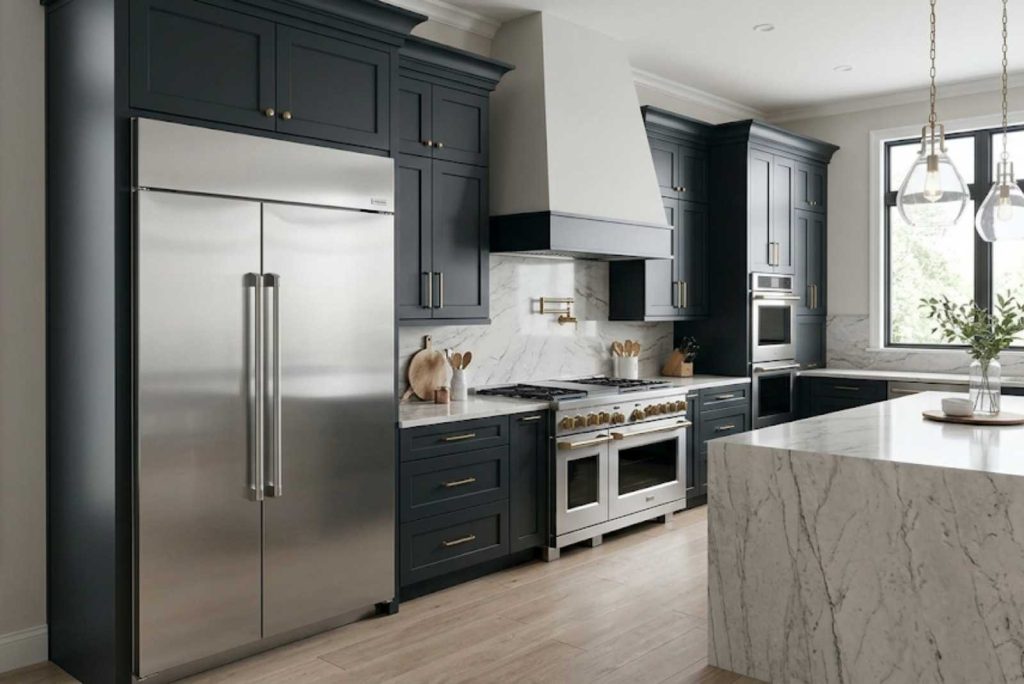
GE Monogram maintenance means cleaning the condenser coils behind the upper grille every 6 months, holding the refrigerator at 37–40°F and the freezer at 0°F, replacing water filters twice a year, and checking door seals, burner igniters, and dishwasher filters on a set schedule. Done on time, these small jobs protect a built-in kitchen worth $5,000 to $25,000 or more.
Your Monogram appliances were built to run for two decades. They reach that age only when the small jobs happen on time, not after a part fails. This checklist sorts every task by how often it needs doing, from monthly seal wipes to the annual deep service. GE Monogram Repair Expert services built-in GE Monogram refrigerators, ranges, wall ovens, cooktops, wine coolers, and dishwashers across California, Washington, and Massachusetts. If a task turns up a fault you would rather hand off, you can book a certified technician anytime.
Why upkeep matters more on a built-in kitchen
A built-in Monogram is fitted into your cabinetry and tied into your home’s water and power. A neglected fault rarely stays small, and the repair often touches more than one appliance.
Most of that risk traces back to two parts: the condenser coils and the door seals. Energy.gov reports a refrigerator with dirty condenser coils can draw up to 25% more electricity than one with clean coils. Dirty coils also make the compressor run hotter and longer, which is the single most expensive part to replace.
Built-in models reward maintenance more than freestanding ones. A cared-for built-in refrigerator commonly lasts 15 to 20 years; a neglected one can fail in 8 to 10. The schedule below is how you stay on the right side of that gap.
Your year-round GE Monogram maintenance schedule
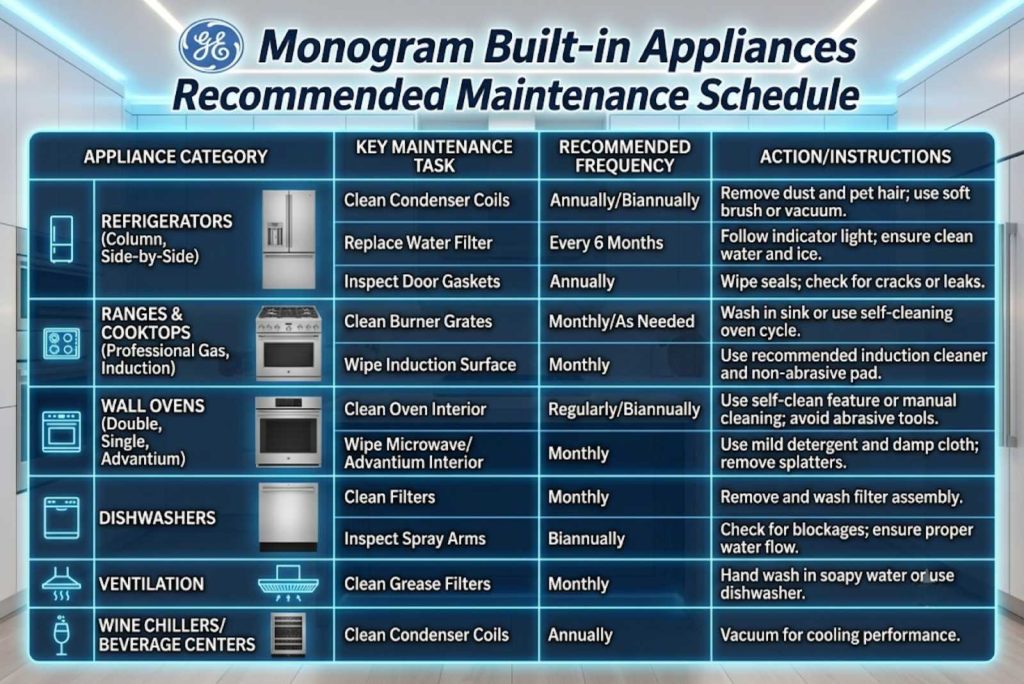
Clean the condenser coils every 6 months, or every 3 months if you have pets, to keep the compressor from overworking. Everything else fits around that anchor. Work the list by frequency and you will never face a season’s worth of upkeep at once.
| How often | Tasks |
| Monthly | Wipe refrigerator and wine cooler door gaskets with mild soap; rinse the dishwasher filter; clean range burner caps and grates; wipe the cooktop with a surface-safe cleaner. |
| Every 6 months | Clean the condenser coils; replace the water filter; test door seals with the dollar-bill check; verify oven temperature with a standalone thermometer. |
| Yearly | Deep-clean dishwasher spray arms and run a vinegar cycle; inspect wine cooler seals and leveling; vacuum the floor and clearances around each unit; book a professional diagnostic check. |
Refrigerator and wine cooler: the sealed-system appliances
The refrigerator and wine cooler share the same weak points, so treat them together. On built-in Monogram models, the condenser coils sit behind the upper grille above the doors, not underneath the cabinet where most guides tell you to look.
Lift the grille, brush the coils gently, then vacuum the dust. Hold the refrigerator at 37–40°F and the freezer at 0°F, and use a standalone thermometer rather than trusting the dial. Check the gasket with a dollar bill: close it in the door, and if it slides out with no drag, the seal needs attention.
Coil access and step-by-step cleaning differ by model, so see our guide to cleaning GE Monogram condenser coils for the full walkthrough. If cooling drifts after a clean coil and a fresh filter, that points to the sealed system, and a built-in refrigerator repair or wine cooler repair visit is the next step.
Range, cooktop, and wall oven upkeep
Cooking appliances fail most often from grease and food debris, not age. Keep igniter ports dry and free of food debris so gas burners light on the first click.
Soak burner caps and grates in warm, soapy water rather than scraping them. On induction and smooth-top surfaces, skip abrasive pads, which scratch the glass and trap heat unevenly. Twice a year, check oven accuracy with a thermometer; if it reads more than 25°F off, the oven needs calibration before your next big roast.
A burner that still won’t light after a thorough cleaning usually means a worn igniter or a control fault. That is a GE Monogram range repair or cooktop repair call, not a cleaning problem.
Dishwasher maintenance
A Monogram dishwasher is a built-in luxury fixture, but it wears like any other dishwasher, so the upkeep is the same plain routine. Rinse the dishwasher filter monthly; a clogged filter is the top cause of poor cleaning and standing water.
Pull the lower rack, twist out the filter, and rinse it under hot water. Wipe the door gasket to stop mildew, clear the spray-arm holes with a toothpick, and run an empty hot cycle with two cups of white vinegar once a month to cut grease and odor.
If the dishwasher still won’t drain after the filter is clean, the drain pump or check valve is the likely cause. A drain pump swap is usually a one-visit dishwasher repair.
When maintenance isn’t enough: signs to call a technician
Maintenance prevents most faults, but some symptoms mean a part has already failed. Persistent temperature drift, repeated icing, a burner that won’t light after cleaning, an error code on the display, or a new grinding noise all call for a diagnosis, not another wipe-down.
GE Monogram Repair Expert uses a diagnostic-first, written-quote workflow, so you see the fault and the price before any work begins, and certified technicians fit genuine OEM parts. Before you book, it helps to know what each fix tends to run; our GE Monogram repair cost guide lays out the ranges by appliance.
Frequently asked questions
How often should I clean the condenser coils on a GE Monogram refrigerator?
Clean the coils every 6 months, or every 3 months if you have pets, since fur and dust collect faster. On built-in Monogram models the coils sit behind the upper grille above the doors. Dirty coils force the compressor to run hot, which raises energy use and shortens its life.
What temperature should a GE Monogram refrigerator and freezer be set to?
Set the refrigerator to 37–40°F and the freezer to 0°F for safe food storage and steady efficiency. Use a standalone thermometer placed in the center for 24 hours rather than trusting the dial, which is relative, not exact. Recheck after any coil cleaning or filter change.
How often should I replace the GE Monogram water filter?
Replace the water filter every 6 months, or sooner if the water or ice tastes off or flow drops. A clogged filter strains the dispenser and can affect ice production. Tie it to your coil-cleaning schedule so both jobs happen on the same day twice a year.
How long do GE Monogram appliances last?
A well-maintained built-in Monogram refrigerator commonly lasts 15 to 20 years, while a neglected one may fail in 8 to 10. Cooking and dishwashing appliances vary by use. See our guide on how long GE Monogram appliances last for lifespan by appliance type.
Do built-in GE Monogram refrigerators need professional maintenance?
Owners can handle coil cleaning, filter swaps, seal checks, and temperature monitoring. A yearly professional check is worth it for built-in units, where access is tight and a small sealed-system issue is easy to miss. Book a visit if cooling, noise, or icing changes after routine upkeep.
Keep the schedule, protect the investment
Maintenance is the cheapest insurance a built-in kitchen has. Clean coils, true temperatures, fresh filters, and tight seals are what carry a Monogram refrigerator past 15 years instead of stalling at 10. Work the monthly, six-month, and yearly lists, and most breakdowns never start.
When a task uncovers something a wipe-down won’t fix, book a diagnostic visit with a certified GE Monogram technician and get a written quote before any work begins. It is the fastest way to protect the appliances your kitchen is built around.