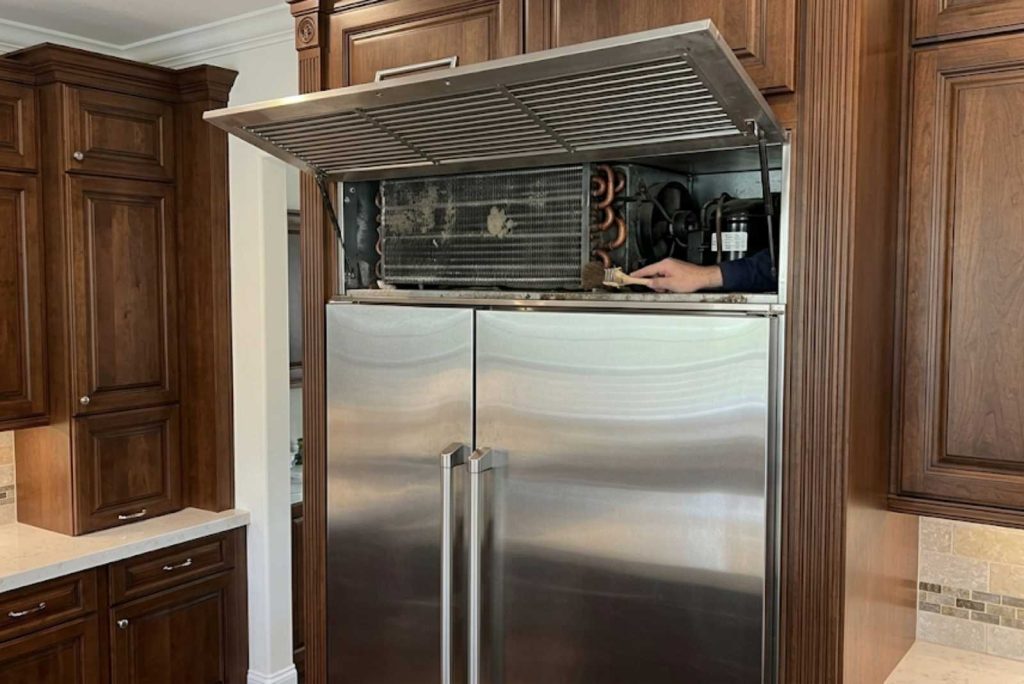
On built-in GE Monogram refrigerators, the condenser coils sit behind the upper grille above the doors, not underneath the cabinet. Cut the power, lift the grille, brush the coils, and vacuum the dust, then replace the grille and restore power. Clean them every 6 months, or every 3 months with pets, to keep cooling steady and energy use down.
Most coil-cleaning guides tell you to pull the fridge out and clean the back. That advice is wrong for a built-in Monogram, which is fitted into your cabinetry and vents from the top. This guide shows where the coils actually are, how to clean them safely, and how often the job needs doing. GE Monogram Repair Expert services built-in GE Monogram refrigerators, wine coolers, and full kitchens across California, Washington, and Massachusetts. If the panel won’t budge or cooling stays off after a clean, you can book a certified technician.
Where the condenser coils are on a built-in Monogram
On built-in and column Monogram models, the condenser sits behind the upper grille above the refrigerator doors. There is no rear or floor access, because the unit is sealed into the surround.
The coils run toward the right side of the machine compartment, behind the compressor. The condenser fins have sharp edges, so wear gloves and a long-sleeved shirt before reaching in. Check your model’s Use and Care guide first, since a few late-model GE units use a sealed condenser that the manual marks as no-clean.
How to clean the coils, step by step
The whole job takes about 20 minutes twice a year and needs only a coil brush, a vacuum, and gloves. A long refrigerator coil brush, such as GE part PM14X51, reaches the back of the compartment where a vacuum nozzle can’t.
- Cut the power. Switch off the refrigerator’s breaker or unplug it. Cleaning a live condenser kicks dust into the air and risks a shock.
- Lift the upper grille. Grasp the grille or decorative panel above the doors on both sides and lift it up and out. Set it aside.
- Brush the coils. Reach a coil brush toward the right side of the compartment and work it gently across the fins to loosen dust and pet hair.
- Vacuum the dust. Use a hose attachment to clear the loosened debris from the coils and the floor of the compartment.
- Replace the grille and restore power. Press the panel back into place, then switch the breaker on. Listen for the compressor to start within a few minutes.
Skip compressed air indoors; it scatters dust deeper into the compartment instead of removing it.
How often to clean the coils
Clean the coils every 6 months, or every 3 months if you have pets, since fur clogs the fins faster than household dust. Tie the job to your water-filter change so both happen on the same day twice a year.
The payoff is real money. Energy.gov reports a refrigerator with dirty condenser coils can draw up to 25% more electricity than one with clean coils. Dust also traps heat against the compressor, the most expensive part to replace. A short twice-yearly clean is the cheapest insurance your refrigerator has, and it fits inside the wider GE Monogram maintenance checklist.
When clean coils don’t fix the cooling
Coil cleaning solves slow, gradual warming. It will not fix a sudden failure. If the refrigerator still runs warm after clean coils, a fresh filter, and 24 hours to recover, the fault is deeper.
Frost on the rear inside wall, a fan that won’t spin, or a compartment stuck above 45°F points to the defrost system, a fan motor, or the sealed system. Those need a diagnosis, not another clean. A built-in refrigerator repair or wine cooler repair visit starts with finding the failed part, and our certified technicians work from a written quote before any repair begins.
Frequently asked questions
Where are the condenser coils on a GE Monogram refrigerator?
On built-in and column Monogram models, the coils are behind the upper grille above the doors, toward the right of the machine compartment. There is no back or bottom access, because the unit is built into the cabinetry. Lift the grille panel up and out to reach them.
How often should I clean GE Monogram condenser coils?
Clean them every 6 months, or every 3 months if you have pets. Dust and fur on the fins force the compressor to run hot, which raises energy use and shortens its life. Pair the job with your twice-yearly water-filter change so it is easy to remember.
Can I just vacuum the coils instead of brushing them?
A vacuum alone won’t reach the packed dust between the fins at the back of the compartment. Brush first with a long coil brush to loosen the buildup, then vacuum it away. Avoid compressed air indoors, which pushes dust deeper rather than removing it.
Do all GE Monogram refrigerators need coil cleaning?
Most built-in and column models do, since their condensers collect dust behind the upper grille. A few late-model GE units use a sealed, no-clean condenser. Check your model’s Use and Care guide, and if it lists a condenser-cleaning step, the coils need routine cleaning.
A 20-minute job that protects the compressor
Clean coils are the difference between a refrigerator that runs quiet and efficient and one that overworks its compressor toward an early failure. The job takes 20 minutes twice a year, costs almost nothing, and is the single most valuable thing you can do for a built-in Monogram.
If the grille is stuck, the compressor runs hot to the touch, or cooling stays weak after a clean, book a diagnostic visit with a certified GE Monogram technician and get a written quote before any work begins.