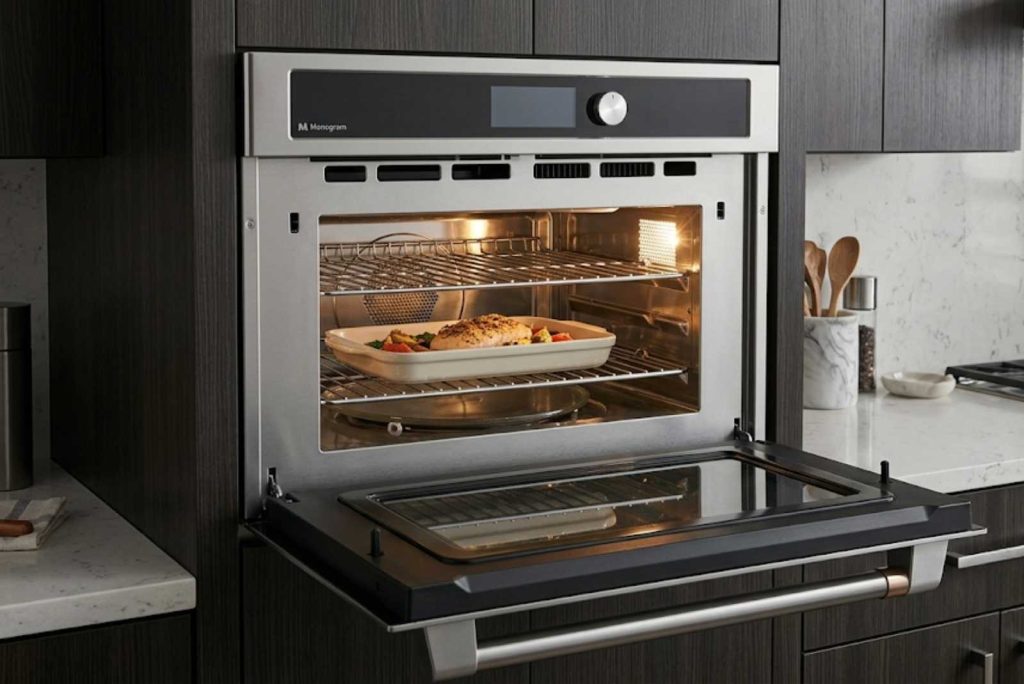
If your GE Monogram Advantium heats in microwave mode but not speedcook, the halogen lamps or ceramic heaters have failed; if it heats in speedcook but not microwave, the magnetron or a high-voltage part has failed. Weak or no heat in both modes points to a blown thermal fuse, a failing magnetron, or the control board.
The Advantium trips people up because it’s really two ovens in one box, and the first thing I do on a no-heat call is find out which one stopped working. That single answer narrows the fault from a dozen parts to two or three. This guide shows you how to make that call yourself, what’s safe to check, and the warranty that may cover the repair. GE Monogram Repair Expert services GE Monogram Advantium speedcook ovens across California, Washington, and Massachusetts. If yours won’t heat after the checks below, you can book a certified technician.
Why the Advantium has two heating systems
To diagnose a no-heat Advantium, you have to know how it cooks. It uses two completely separate heating technologies, plus convection on some models.
Microwave mode runs on a magnetron, the same part as any microwave. Speedcook mode combines high-intensity halogen lamps and ceramic heaters with microwave energy to cook from the top, bottom, and inside at once, and convection models add a 1,550-watt element with a fan. Because these systems are independent, the test is simple: run the oven in microwave mode, then in speedcook mode, and note which one fails. That answer tells you which subsystem to suspect before anyone opens the oven.
Microwave mode won’t heat: the high-voltage side
If speedcook works but a cup of water won’t warm in microwave mode, the fault is on the microwave’s high-voltage circuit. The magnetron generates the microwaves, and it is the usual culprit, often failing without warning.
A magnetron that hums loudly and then quits is a classic sign it’s drawing too much current as it fails. The high-voltage diode, capacitor, transformer, and door interlock switches can also stop microwave heating. This is the one repair I tell owners never to attempt: the high-voltage capacitor stores a dangerous charge even after the oven is unplugged, so magnetron and high-voltage work belongs with a technician.
Speedcook mode won’t heat: the halogen and ceramic side
The opposite pattern, microwave heats but speedcook doesn’t, points away from the magnetron entirely. Here the suspects are the halogen lamps, the ceramic heaters, and the relay board that powers them.
The tell-tale symptom is a speedcook cycle that programs, lights up, and sounds normal but produces no real heat, which means a lamp or heater isn’t firing even though the controls work. There’s a quick check: during a microwave cycle, pressing the oven-light pad briefly turns on an upper speedcook lamp for a few seconds, so you can confirm at least one lamp lights. Technicians confirm it with a performance test, heating a liter of water under the halogen lamps to measure the temperature rise. A failed lamp, ceramic heater, or relay board needs professional replacement.
Weak or no heat in both modes: thermal fuses and the control board
When both modes are weak or dead, look at the parts the systems share. Because a speedcook uses microwave energy too, a failing magnetron can drag down both modes at once, which is why a unit can seem to lose everything.
The other common cause is a thermal fuse, also called a thermal cutoff, that has opened. These safety devices sit on the oven cavity and the magnetron, and they blow after heavy speedcook or convection use to protect the oven from overheating. A unit that hummed once and then went completely dark, with no display, usually has an open thermal fuse or a blown line fuse, not a tripped breaker. The control board is the last shared suspect. Important: a thermal fuse blows for a reason, so a good technician finds the overheating cause, not just the fuse.
What you can safely check, and the warranty that may cover it
A few checks are safe and worth doing before you call. Make sure the door closes fully so the interlock switches engage, confirm the breaker is on, and remember that 240-volt Monogram models need both legs of power, so partial function can mean a lost leg.
Clear the vents, let the oven cool completely if it shut down mid-cycle, and try a 5-minute power-cycle at the breaker. Then check your warranty before paying for parts: GE has offered a 10-year limited warranty on the magnetron and the speedcook halogen lamps on Advantium ovens, which are two of the most likely failed parts. If yours is within that window, the part may be covered, so confirm the terms for your model before booking a paid repair.
When to call a technician
Past the door, breaker, and warranty checks, an Advantium no-heat fault needs service tools and training. Isolating a magnetron from a halogen lamp from a thermal fuse takes the built-in performance tests and a multimeter, and the high-voltage side is genuinely hazardous.
GE Monogram Repair Expert works from a diagnostic-first written quote, so you see the failed part and the price before any work begins, and certified technicians fit genuine OEM parts. To weigh the repair against the unit’s value, see our Advantium and microwave cost guide and our repair-or-replace guide. If the oven also shows a fault code, our oven error code guide explains what it means.
Frequently asked questions
Why does my GE Monogram Advantium heat in microwave mode but not speedcook?
If microwave heating works but speedcook produces no real heat, the halogen lamps, ceramic heaters, or the relay board that powers them have failed. The controls and lights can look normal while a lamp or heater isn’t firing. This is a professional repair, since it involves the speedcook heating circuit rather than the microwave side.
Why won’t my Advantium microwave heat but speedcook works?
When speedcook heats but microwave mode won’t warm food, the magnetron or another high-voltage part has failed. A magnetron that hums and quits is a common sign. Never attempt this repair yourself: the high-voltage capacitor holds a dangerous charge even when unplugged, so it needs a technician.
Why did my GE Monogram Advantium suddenly lose all power?
A sudden total blackout, no display or lights after the oven hummed or ran briefly, usually means an open thermal fuse or a blown line fuse, often triggered by overheating during heavy speedcook or convection use. A tripped breaker is less likely if the rest of the house has power. A technician should find why it overheated before replacing the fuse.
Are GE Advantium magnetrons and halogen lamps under warranty?
GE has offered a 10-year limited warranty on the magnetron and the speedcook halogen lamps on Advantium ovens, two of the parts most likely to fail. If your oven is within that window, the part may be covered even after the main warranty ends. Confirm the exact terms for your model before paying for a repair.
Is it worth repairing a GE Monogram Advantium that won’t heat?
Often yes, because a built-in speedcook oven is expensive to replace, and a covered magnetron or lamp can make the repair inexpensive. The decision depends on the unit’s age and which part failed. Get a written diagnosis, then weigh it with our Advantium cost guide and repair-or-replace guide.
Find the failed system, then the failed part
A no-heat Advantium is far less daunting once you know it’s two ovens in one. Run microwave mode, run speedcook mode, see which one fails, and you’ve already narrowed the repair to a handful of parts.
Do the safe checks, confirm your warranty, and if the oven still won’t heat, book a diagnostic visit with a certified GE Monogram technician and get a written quote before any work begins.