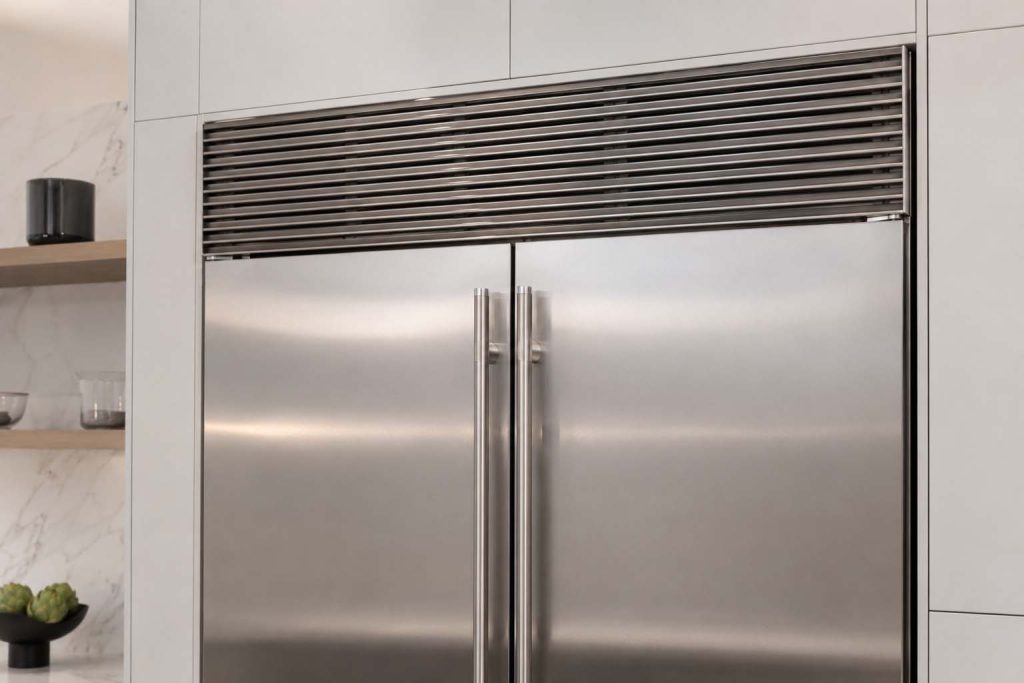
A GE Monogram refrigerator making noise is usually running normally — soft humming, gurgling, and occasional clicking come from the compressor, refrigerant flow, and defrost cycle. Loud buzzing, grinding, repeated clicking, or constant knocking is different. Those sounds point to dirty condenser coils, a failing fan motor, a stuck water inlet valve, or a compressor problem that needs a technician.
Built-in Monogram refrigerators mount the compressor and condenser at the top of the cabinet, near ear level, so every sound carries further than owners expect. This guide — part of our GE Monogram refrigerator troubleshooting series — walks through humming, buzzing, clicking, knocking, popping, and hissing, and separates normal operation from faults. GE Monogram Repair Expert is a repair service specializing in GE Monogram and GE Profile built-in appliances across California, Washington, and Massachusetts. If your refrigerator is loud and losing its chill at the same time, go straight to GE Monogram refrigerator repair.
Normal GE Monogram refrigerator sounds you can ignore
Monogram refrigerators are quiet, not silent. Most normal Monogram refrigerator sounds come from 3 systems: the variable-speed compressor, refrigerant moving through the lines, and the automatic defrost cycle. A soft hum that changes pitch through the day is the compressor adjusting speed, not a fault.
Expect gurgling or trickling after the door closes — that is refrigerant and defrost water moving where they should. A sizzle or soft hiss during defrost is meltwater hitting the defrost heater. Pops and cracks are the interior liner expanding and contracting with temperature swings.
A single click at the start or end of a cooling cycle is a relay doing its job. None of these sounds needs a service call.
Buzzing sounds: coils, water valve, or loose hardware
A GE Monogram refrigerator buzzing sound has three usual sources: the water inlet valve, the condenser area, and hardware that has worked loose. The water inlet valve typically buzzes for 5 to 10 seconds each time the ice maker fills, several times a day. That short buzz is normal.
A longer, raspy buzz with no water flow means the valve is clogged or failing, and ice production usually drops with it. Our guide to a GE Monogram ice maker not working covers that diagnostic path.
A loud, constant buzz from the top of the cabinet points to the condenser. Dust and pet hair force the fan and compressor to work harder and louder. Follow our condenser coil cleaning guide — on built-in models the coils sit behind the top grille, not at the floor. If the buzz survives clean coils, loose compressor mounts are next on the list.
Loud humming or grinding: check the two fans
A built-in Monogram refrigerator runs 2 main fans: the evaporator fan behind the interior back panel and the condenser fan behind the top grille. Each one fails with its own sound.
A squeal, chirp, or loud whir that quiets when you open the door is the evaporator fan. The usual cause is frost building up around the blades after a defrost fault. The frost returns until the defrost problem is fixed, so this is a repair call, not a cleaning job. Grinding or scraping from the top of the unit is the condenser fan: a blade striking debris, or motor bearings wearing out.
When a GE Monogram fridge makes a loud noise that builds over weeks, dirty coils are the most common cause. They force the condenser fan into overtime. Fan motors are, in most cases, a single-visit repair when caught early.
Clicking, knocking, or rattling: listen to the compressor
A relay that clicks, buzzes for a few seconds, and clicks again every 2 to 5 minutes is a compressor trying to start and failing. That pattern often arrives with a warming interior. If your temperatures are drifting too, read our GE Monogram refrigerator not cooling guide and treat the combination as urgent.
A brief shudder or soft knock when the compressor shuts off is normal. Knocking that continues while the unit runs points to worn compressor mounts or the compressor itself.
Rattling is usually hardware, not machinery: a loose top grille, custom panel screws that have backed out, or items stored against the cabinet. Integrated Monogram models transmit vibration into the surrounding cabinetry, so a small rattle can sound bigger than it is.
What does a bad refrigerator compressor sound like?
A failing compressor gets louder over weeks: the normal low hum grows into a harsh mechanical drone. You may also hear knocking each time it starts and stops. Add repeated relay clicking, or a unit that never cycles off, and the compressor is the prime suspect. Sealed-system diagnosis belongs to a technician — more on why below.
What each sound means at a glance
Here are the 10 most common refrigerator sounds, from harmless to call-now, in one table.
| Sound | Likely source | Normal? | What to do |
| Low hum that changes pitch | Variable-speed compressor | Yes | Nothing |
| Gurgling after the door closes | Refrigerant and defrost drain | Yes | Nothing |
| Brief buzz a few times a day | Ice maker water inlet valve | Yes | Nothing |
| Pop or crack | Liner expanding with temperature | Yes | Nothing |
| Sizzle or soft hiss in defrost | Meltwater on the defrost heater | Yes | Nothing |
| Loud constant buzz | Dirty condenser coils, valve, or mounts | No | Clean coils; call if it continues |
| Squeal that stops when the door opens | Frosted evaporator fan | No | Book a repair — defrost fault |
| Grinding or scraping | Condenser fan blade or bearings | No | Book a repair |
| Click-buzz-click every few minutes | Start relay / compressor | No | Call promptly |
| Constant knocking or continuous hiss | Compressor or refrigerant system | No | Call promptly |
When to call a professional
Call when a sound arrives with a second symptom: warming shelves, stopped ice production, new frost, or a tripping breaker. Call promptly for grinding, click-buzz-click relay cycling, constant knocking, or a continuous hiss — an unbroken hiss can mean refrigerant escaping, which is rare but serious.
Federal Section 608 rules require EPA certification for refrigerant handling, so sealed-system noise is never a DIY repair. Fan motors, relays, and valves are smaller jobs, and catching them early is what keeps a $10,000-class column refrigerator off the replacement list. For what each fix typically involves, see our GE Monogram refrigerator repair cost guide.
Our technicians work on Monogram built-ins across California, Washington, and Massachusetts — including GE Monogram repair in San Jose and GE Monogram repair in Palm Springs.
Frequently asked questions
How do I get my GE Monogram refrigerator to stop making noise?
Clean the condenser coils first — dust and pet hair behind the top grille make the fan and compressor run louder than they should. Then clear anything stored against the cabinet, check that the top grille is seated, and listen again. If the sound continues, a technician should inspect the fans, relay, and compressor.
Is it safe to ignore refrigerator noises?
Normal sounds are safe to ignore: low humming, gurgling after the door closes, brief buzzing during ice maker fills, and pops from the liner expanding. Grinding, repeated clicking, constant knocking, or a continuous hiss are not safe to ignore. Those sounds involve the fans, compressor, or refrigerant system, and waiting usually turns a small repair into a large one.
When should I worry about my fridge making noise?
Worry when a noise arrives with a second symptom: rising temperature, an ice maker that stops producing, new frost, or a burning smell. A new loud noise that runs constantly also deserves a same-week look. On a Monogram built-in, early fan or relay repairs cost far less than a compressor replacement.
Get the sound diagnosed before it becomes a cooling failure
Most refrigerator sounds are the machine doing its job. The ones to act on are grinding, repeated clicking, constant knocking, and any noise paired with warming. Catching a fan or relay fault early protects the compressor — the most expensive component in the cabinet.
If a sound on this page matches yours, book a diagnostic visit through our GE Monogram refrigerator repair page. A certified technician traces the sound to the exact component and repairs it with the correct GE part.